“The Visible Pathway Project: From Crisis to Community Cash Flow.”
From Invisible People to Visible Possibilities: Can Community Cash Flow Help Change Homelessness?
A video titled “How 50 Homeless Americans Stopped Paying Rent and Quietly Built Their Own RV Village in the Forest” presents a powerful idea: people experiencing homelessness are not helpless. When individuals organize, share resources and work toward a common goal, they can create forms of stability that traditional systems have failed to provide.
The community shown in the video should not be treated as a complete national solution. Living in an informal RV or tiny-home village can raise serious questions involving land ownership, sanitation, zoning, healthcare, safety and long-term housing rights.
But the larger lesson is important:
People facing homelessness do not only need charity. They need tools, community, visibility and a realistic pathway to income and housing.
That is where the work of Mark Horvath and Invisible People offers an important foundation.
Mark Horvath Made Invisible People Visible
Mark Horvath created Invisible People after experiencing homelessness himself. His organization uses interviews, education and advocacy to give people experiencing homelessness the opportunity to tell their own stories. Its stated vision is a world where everyone has a home.
Instead of speaking about homeless people as statistics, Horvath puts a face, a voice and a human story behind the crisis.
That matters because homelessness is often misunderstood.
Some people assume that everyone without housing is unemployed, irresponsible or unwilling to work. In reality, people can become homeless after an eviction, illness, family emergency, job loss, domestic violence, disability or an increase in rent that their income cannot absorb.
Invisible People challenges the public to stop asking, “What is wrong with that person?” and begin asking, “What happened—and what resources could help this person rebuild?”
The Alpha Referral Engine could build upon that same human-centered philosophy.
The Missing Link Between a Story and a Solution
A powerful story can generate attention, empathy and donations.
But attention does not automatically become long-term financial stability.
A person may receive enough money to pay for a motel room, repair a vehicle or stop an eviction. Yet the same crisis can return 30 days later if the person still lacks dependable income.
The Alpha Referral Engine is designed around a different question:
Can everyday people learn to use legitimate referral rewards, cashback programs and community purchasing power to create small amounts of emergency cash flow?
It is not a replacement for employment, affordable housing, disability benefits, healthcare, rental assistance or government-supported housing programs.
It is a supplemental tool.
For someone who is one utility bill, car repair or late rent payment away from displacement, even a small financial win may create breathing room. A series of transparent, properly managed micro-wins could help someone move from immediate crisis toward greater stability.
A New Model: The Visible Pathway Project
Imagine combining the storytelling power of Invisible People with a carefully supervised Alpha Referral Engine program.
The project could be called The Visible Pathway Project.
Rather than distributing an app to vulnerable individuals and simply telling them to “get referrals,” each participant would receive a structured support system.
Step One: Listen Before Offering a Program
Every participant’s situation is different.
One person may need $300 to stop a utility shutoff. Another may need a security deposit. Someone living in an RV may need repairs, registration or insurance. A working parent may need transportation to keep a job.
Participants should be allowed to tell their own stories, define their own goals and decide whether they want those stories shared publicly.
No one should be required to reveal trauma or appear in a video to receive help.
Step Two: Create a Personal Stability Goal
The program would help each participant identify a specific and realistic objective, such as:
- Preventing an eviction.
- Paying a rental deposit.
- Repairing the vehicle in which they live.
- Replacing identification documents.
- Purchasing work clothing or equipment.
- Establishing a small emergency fund.
- Moving from a tent or vehicle into transitional housing.
The Alpha Referral Engine would then be presented as one possible income-support strategy—not as a guaranteed rescue plan.
Step Three: Provide Digital Access and Training
Many referral programs assume that participants already have smartphones, internet access, identification, bank accounts and strong digital skills.
People experiencing homelessness may not have all of these resources.
A responsible initiative would therefore provide access to charging stations, Wi-Fi, basic digital-literacy training, secure email accounts and help understanding program requirements.
Participants must also be taught how to recognize scams, protect personal information and avoid programs that require unaffordable purchases.
Step Four: Build a Community Referral Network
The village in the video reflects the power of collective action. The same principle could be applied to ethical referral marketing.
Instead of leaving each person to struggle alone, a community network could help participants:
- Create honest social-media posts.
- Share offers with people who could genuinely benefit.
- Explain cashback programs without exaggeration.
- Track referrals and payments.
- Celebrate small milestones.
- Refer interested people to housing, employment and community services.
This turns referral activity into a cooperative learning system rather than a desperate individual sales effort.
The Community Emergency Wallet
A portion of participating community revenue could also support a transparent Community Emergency Wallet.
For example, participating members might voluntarily contribute a small percentage of verified earnings into a locally administered fund. That money could be used for urgent needs such as identification fees, transportation, work supplies, prescription costs, RV repairs or rental application fees.
The fund would need written rules, independent oversight, accurate accounting and safeguards against misuse.
The purpose would not be to take money away from people who already have very little. It would be to show how coordinated micro-contributions can become a community-controlled safety net.
Why This Could Change the Conversation
Traditional homelessness campaigns often place the housed person in the role of rescuer and the unhoused person in the role of recipient.
This model would tell a different story.
The individual experiencing homelessness becomes a participant, storyteller, community builder and potential income producer.
The message changes from:
“Please save these people.”
To:
“Give people access to the tools, protections and opportunities required to help rebuild their own lives.”
That is consistent with the central strength of Invisible People: restoring identity and humanity to people whom society frequently overlooks. Invisible People has used first-person storytelling to reshape public understanding and promote solutions rather than stereotypes.
Essential Protections
This idea must be developed with great care.
People facing homelessness and eviction are financially vulnerable. That means the Alpha Referral Engine must never be marketed to them with promises of guaranteed income, instant wealth or certain housing.
Every campaign should clearly state:
- Earnings depend on each program’s current terms and individual activity.
- Referral payments are not guaranteed.
- Offers can change or end.
- Participants should never spend rent, food or medication money to qualify.
- Results from one participant do not predict another participant’s results.
- Participation must not affect access to shelter, food, housing support or other services.
- Some income may affect eligibility for public benefits and should be reported correctly.
- Personal stories, images and financial results require informed consent before publication.
The project should also partner with housing professionals, legal-aid organizations, benefits counselors and people with lived experience of homelessness.
The app should never stand alone.
A Bridge, Not the Entire Destination
Homelessness will not be solved by cashback apps or referral bonuses.
America still needs affordable housing, living wages, healthcare, mental-health services, tenant protections, supportive housing and effective prevention programs.
But while society works toward those larger changes, people in immediate danger need practical tools they can use today.
The Alpha Referral Engine could become one part of that bridge.
Mark Horvath showed that a camera, a human story and an internet connection could make invisible people visible.
Community-built villages show that individuals who have been pushed outside the traditional housing system can still organize, cooperate and create belonging.
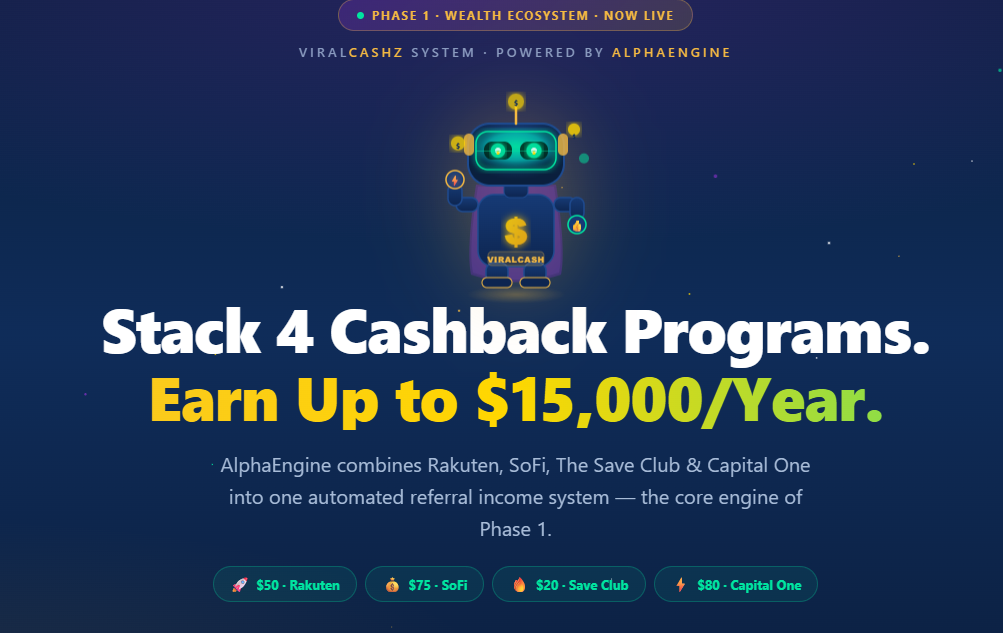
The Alpha Referral Engine introduces a third element: a structured way to teach people how to identify legitimate referral opportunities, generate supplemental cash flow and work toward a defined financial goal.
“Love is the quiet strength that lifts us in our weakest moments, the gentle warmth that melts fear, and the unspoken language that connects souls. It’s not about perfection but about growing, healing, and embracing life’s imperfections together, with hearts wide open and boundless hope.”
Visibility creates understanding.
Community creates strength.
Small financial wins create movement.
Together, those ideas could help change the face of homelessness—not by pretending that an app can solve a national housing crisis, but by placing useful tools, meaningful choices and greater economic agency into the hands of people who have too often been denied all three.
Let Wealth Go Viral—With Dignity
The Alpha Referral Engine should not be built around exploiting poverty.
It should be built around helping people interrupt it.
The goal is not to turn a person’s hardship into promotional content. The goal is to help that person move from being unseen, unheard and financially trapped toward becoming visible, supported and equipped with a pathway forward.
Because everyone deserves more than temporary survival.
Everyone deserves the opportunity to build stability, participate in a community and reclaim a future