
Companies spend billions of dollars annually on cashback rewards, with the broader U.S. cashback programs market projected to reach $75.48 billion, and individual major issuers like Capital One distributing $7.6 billion in a single year
California could house its 117,000 unsheltered individuals with a directed strategy — not new dollars, but redirected ones.
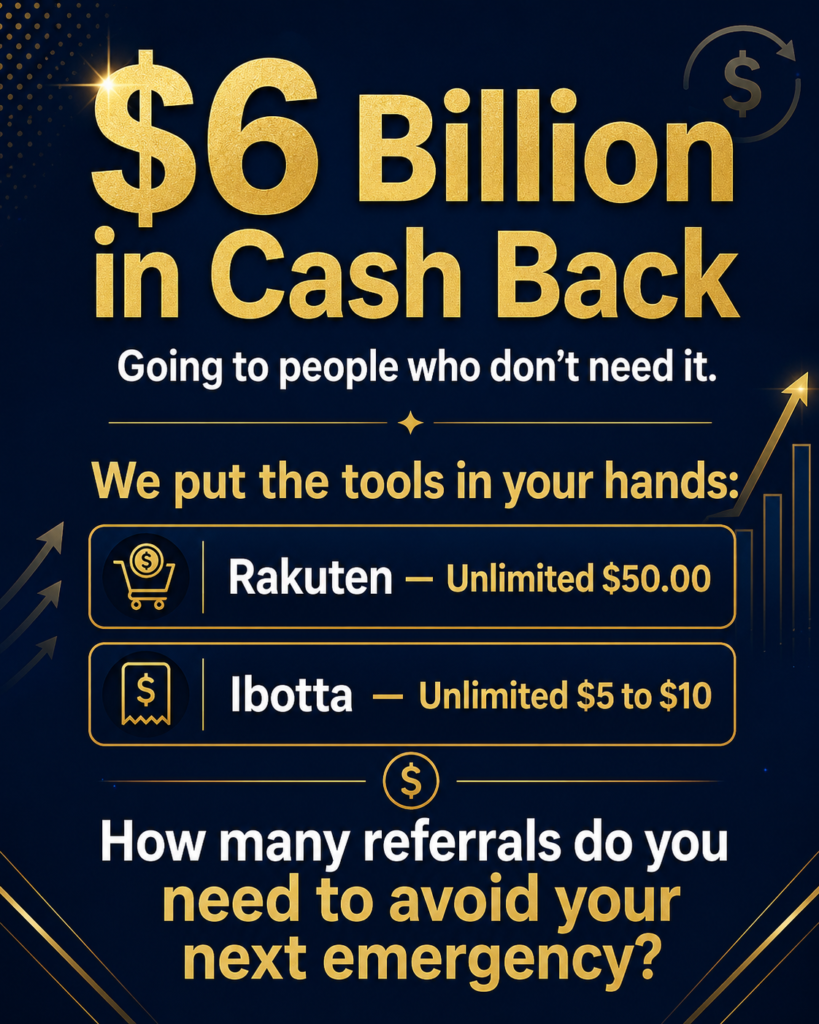
$6B spent on cashback rewards annually in the U.S.
There is no shortage of money
Opinion · Financial Inclusion · Community Strategy
As of the most recent Point-in-Time count, California is home to approximately 117,000 unsheltered individuals. People sleeping in parks, in cars, in doorways. Many of them are employed. Many of them are one bad month away from stability — not years, not decades. One month.
The conversation we keep having focuses on what we do not have. Not enough housing units. Not enough shelter beds. Not enough state funding. Not enough political will.
I want to talk about what we already have in extraordinary abundance — and why it is not reaching the people who need it most.
The $6 billion hiding in plain sight
Every year, American companies spend approximately $6 billion on cashback and referral reward programs. These programs are
designed to change consumer behavior — and they work extraordinarily well. The behavioral psychology behind them is
sophisticated, deliberate, and decades-tested.
But here is the structural problem: cashback programs were built for people who already have spending power to optimize. The
assumption embedded in every reward program is that you have discretionary income, a credit card, and the cognitive bandwidth to
engage with a loyalty system.
That assumption excludes the 117,000 people sleeping outside in California tonight. And it excludes millions more who are one crisis
away from joining them.
The money is not absent. The strategy is what is missing. And strategy is something we can build — right now, with what already
exists.
But here is what that assumption gets wrong.
Gas is not discretionary. Everyone who drives buys gas — Ibotta pays cash back on it.
Groceries are not discretionary. Everyone eats — Ibotta works at every major grocery chain.
Banking is not discretionary. Everyone needs somewhere to deposit a paycheck SoFi pays you $25 the moment you deposit $50.
Sharing a referral link requires nothing but a smartphone and a network — and Rakuten pays $50 for every person you refer, with no
ceiling on how many.
These programs do not require privilege. They require awareness and a system.
What the math actually says
Let me walk through a concrete scenario that I believe is not only possible but replicable at scale.
A major church in Los Angeles partners with a transitional shelter to identify 40 residents who are employed or work-ready — people with smartphones, with jobs, with networks of coworkers and community members.
No active substance use disorder.
No untreated severe mental illness.
Just people whose income has not caught up with the cost of housing in one of the most expensive cities on earth.
The church runs a single two-hour workshop. Every participant signs up for six free programs: Rakuten, SoFi, Ibotta, BeFrugal,
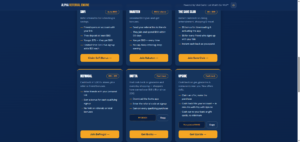
Upside and The SaveClub. Each person receives support setting up their accounts and generating their referral links.
Over the following 90 days, each of the 40 participants refers an average of 8 people from their existing networks — coworkers, family members, church friends — to Rakuten. That is 320 referrals. At $50 each, that is $16,000 in referral bonuses moving through a community that needed it.
Add the SoFi welcome bonuses, Ibotta grocery cash back on everyday purchases, and SaveClub’s referral commissions of $20 per monthly subscriber and $32 per annual subscriber — paid every Friday — and you have a layered, compounding income stream that costs the state of California exactly nothing to implement.
This is not charity. This is strategy. And the distinction matters enormously.
Why this is different from what has been tried
California has spent billions on emergency shelter beds, navigation centers, and housing vouchers. Some of the investment has worked. Much of it has not — because the people it is designed to serve are participants in the solution only at the margins.
I hold a deep conviction about community change: if the help is going to be long-lived, the people it serves must be participants in addressing the issue. Not just recipients.
The cashback and referral framework does something most intervention programs do not. It creates financial agency. When a shelter resident earns $400 in Rakuten referral bonuses over ninety days, they have not received a handout. They have built a skill — how to identify a product worth sharing, how to communicate its value, how to generate income from their existing network. That skill does not disappear when the shelter placement ends.
Financial dignity is not a luxury. It is the foundation everything else rests on. Housing is not sustainable without it. Recovery is not sustainable without it. Community is not sustainable without it.
Gina Sands
The role of faith communities
I want to speak directly to pastors, deacons, and faith community leaders for a moment, because I believe you hold a specific and powerful role in making this work.
You already have the infrastructure. You have trust — the single most valuable asset in any financial change initiative. You have consistent communication channels. You have a congregation that shows up, that is invested in its community, and that has an existing relationship with the people this framework is designed to serve.
SaveClub’s 501(c)(3) partnership capability means a church or nonprofit can establish a referral relationship that generates ongoing income for the organization — not just for individuals. Every community member who joins SaveClub through the church’s link generates a commission. Every week. Automatically. Without a grant application, a fundraiser, or a staff person dedicated to it.
This is a perpetual fundraiser that runs itself — and simultaneously serves the people it was designed to help.
A Framework for California specifically
I want to name something that matters for this conversation. California’s benefit structures sometimes penalize supplemental income in ways that discourage exactly the kind of financial participation this framework creates. A shelter resident who earns $300 in referral bonuses should not find themselves worse off because that income affects their benefit eligibility.
I am not a policy expert and this is not a policy paper. But I believe there is an opportunity for advocates, legislators, and shelter organizations to work toward a framework that explicitly encourages and protects this kind of financial agency — treating referral and cashback income the way we should treat any small-scale entrepreneurial activity during a transition period.
The people sleeping outside tonight are not a monolith. Some are in crisis. Some are in recovery. And some — a significant number — are hotel housekeepers washing up in McDonald’s bathrooms before their morning shift, driving to work from a car because the gap between their paycheck and a deposit is $200 too wide.
Those people do not need charity. They need the same financial strategy that middle-class America takes for granted — shown to them clearly, by someone they trust, with the infrastructure to make it work.
What a directed strategy looks like
The programs that make this possible
Each of the following programs is free to join for three of the four, legitimate, publicly verifiable, and paying out to real users every day.
SoFi — $25 instant bonus on $50 deposit
Ibotta — $5–$10 per referral, grocery cash back
SaveClub — Health benefits + $20–$32 per referral weekly. Lowest Travel Benefits in the Industry
SaveClub’s $79.97 enrollment gives members access to a $49.97 family health benefit plan, travel and entertainment discounts, and bill reduction services — benefits that directly reduce monthly cash outflow for people in financial transition. The referral income from two monthly subscribers covers the ongoing $19.97 monthly membership entirely.
None of these programs guarantee income. Results depend on individual activity and how many referrals complete qualifying actions. But they are real, they are paying out right now, and they are accessible to anyone with a smartphone.
A closing thought
I spent twenty years in corporate environments — Lockheed, Xerox, Applied Materials, UT Arlington — watching sophisticated reward and loyalty programs operate at scale. The behavioral science behind them is extraordinary. The spending behind them is extraordinary.
What has never been extraordinary is the effort to direct that money toward the people who need it most.
That is not a funding problem. It is a strategy problem. And strategy is something we can build together — right now, without waiting for a government program, without a grant, and without anyone’s permission.
If you lead a shelter, a faith community, or a policy organization in California and this framework resonates with what you are working on — I want to have that conversation.
The pilot cohort is forming now. Reach out directly.
Faith community leaders
Policy advocates
HR and employee benefits professionals
Nonprofit directors