
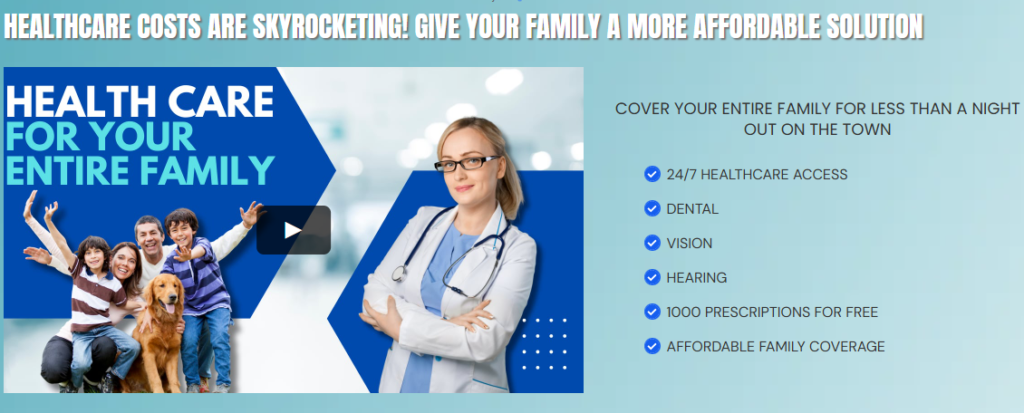
Explore The Save club Health Care For Your Entire Family
There are not many businesses that can show their commitment to customer satisfaction the way The Save Club demonsrates.
Many businesses talk about their commitment to customer happiness, but the reality is that true customer satisfaction is often an afterthought.
When a businesses wants to fully meet customer requirements and offer extraordinary experiences, they must embrace a strong customer-first strategy and offer customers what they need at the best possible price.
A customer-first strategy is an excellent method to keep your company focused on what matters most i.e; nothing but, customers.
By putting customers at the center rather than the product, the organization is constantly and proactively finding ways to provide a positive customer experience by designing and delivering products and services that the customer truly needs.
With this in mind. So, let’s look at some approaches to implement this strategy.
Top Customer Strategies
1. Understand your target audience
Firstly, without understanding who your customers are, you can’t have a customer-first strategy. You must have a thorough understanding of your target audience and how your company enhances their experience. The more empathy brands have for their customers, the more genuine connections they may be able to form. By building good relationships with customers, you can learn more about the uses of your product. You will also be able to get better insight into what a similar audience is looking for when searching for a product like yours.
Meeting the Market with What They Need
Meeting the needs of the customer is the most important product that any company can offer its custmers. In this economic climate, families are struggling with food costs, housing costs and health costs.
2. Understand Customer’s Goal – Families Need Healthcare
Behind every buyer’s persona stands a real individual. Defining personas and working in collaboration with customers is an effective way to earn the heart share of the customers.
Offering health care is a million-dollar offer because total family coverage premiums now approach $27,000 annually, medical inflation is driving employer costs up by roughly 7–9%, and high-cost specialty drugs like GLP-1 weight-loss medications heavily strain corporate budgets.
Offering a low cost health plan for all families, is a total game changer for any business that can distribute this benefit effectively.
The purpose of this is not only to understand your customers’ buying needs, but also to understand who they are, their goals, challenges, and emotions. Being customer-focused allows you to better understand your customers and align your products and services to provide exceptional value. This is also one of the most effective strategies to boost consumer loyalty and brand recognition.
Offering health care is a million-dollar offer because total family coverage premiums now approach $27,000 annually, medical inflation is driving employer costs up by roughly 7–9%, and high-cost specialty drugs like GLP-1 weight-loss medications heavily strain corporate budgets. [1, 2, 3, 4]
Financial Realities for Employers
- Escalating Premiums: Average health insurance costs roughly $8,000 to $14,000 per employee annually for individual coverage, compounding total annual business overhead. [1]
- Inflation and Utilization: Surging prices for hospital services, physician care, and rising employee utilization drive constant year-over-year cost spikes. [1]
- Specialty Drug Burdens: Coverage for advanced biologicals and weight-loss therapies escalates baseline expenditures for mid-market and small businesses. [1, 2]
Strategic Value for Talent Retention
Morale and Productivity: Workers with secure access to preventative care and mental health services exhibit fewer absenteeism issues and higher workplace engagement.
Unmatched Financial Relief: With consumer costs soaring for gas, groceries, and housing, robust health benefits serve as a massive indirect compensation boost. [1, 2]
Competitive Edge: Companies providing comprehensive medical packages easily out-recruit competitors offering stagnant wages or zero benefits.
Most conversations about building wealth begin with earning more money.
- Work harder.
- Start a side hustle.
- Invest in the stock market.
- Learn AI.
- Build passive income.
Those are all worthwhile goals.
But what if the biggest obstacle standing between a family and financial stability isn’t a lack of income?
What if it’s one unexpected medical bill?
Financial Emergencies Destroy Wealth Before It Has a Chance to Grow
Millions of hardworking families are doing everything right.
- They pay their rent.
- They go to work every day.
- They try to save.
Then life happens.
A child needs dental work.Someone needs prescription medication.An eye exam reveals they need glasses.
Suddenly, hundreds—or even thousands—of dollars disappear from the family budget.
- That money was supposed to pay off debt.
- Start an emergency fund.
- Repair the family car.
- Invest for retirement.
Instead, it goes toward expenses that many families simply weren’t prepared for.
The result is a cycle that repeats itself over and over again.
Building Wealth Requires Protecting What You Already Have
We often think of wealth as making more money.
Real wealth also means protecting yourself from financial setbacks.
That’s why affordable healthcare deserves to be part of every financial conversation.
When families have access to healthcare benefits they can actually afford, they gain something priceless: breathing room.
Instead of constantly reacting to financial emergencies, they can begin planning for the future.
Why Community Matters
One of the most overlooked ideas in personal finance is that communities often create opportunities individuals cannot create alone.
Cashback programs work because thousands—even millions—of people participate.
Referral programs grow because people help one another discover useful services.
Communities create buying power.
Communities create savings.
Communities create opportunity.
When people work together for their common good, extraordinary things become possible.
Where Save Club Fits Into the Picture
One reason I frequently discuss Save Club is because it combines everyday savings with benefits that many families value.
Among its offerings is an affordable healthcare benefits package that includes vision and dental benefits, along with access to a large formulary of eligible prescription medications at no additional cost through participating providers.
For many working families, having access to healthcare benefits at an affordable monthly cost can make the difference between delaying care and getting the treatment they need.
Healthcare isn’t simply another expense.
It’s financial protection.
It helps families reduce the risk that an unexpected health-related expense will derail their budget or long-term goals.
Save Club also offers members access to travel discounts, shopping savings, and a perpetual fundraising program that schools, churches, and nonprofit organizations can use to support their missions. These features demonstrate how a membership-based community can provide value beyond a single benefit.
A Strong Financial Foundation Comes Before Investing
People often ask me why I spend so much time talking about cashback programs, referral marketing, and practical ways to save money.
The answer is simple.
It’s difficult to think about investing in the future when you’re worried about paying today’s bills.
Once families reduce financial stress, build emergency savings, and protect themselves from unexpected expenses, they can begin learning about long-term wealth-building strategies like investing, compound growth, and financial planning.
Financial freedom isn’t built overnight.
It’s built one smart decision at a time.
Final Thoughts
Affordable healthcare may never be the most exciting topic on social media.
But it may be one of the most important.
Helping families protect their health also helps protect their finances.
When we combine affordable healthcare, everyday savings, cashback opportunities, and communities that encourage people to help one another, we create something much bigger than another income opportunity.
We create a pathway toward greater financial resilience.
And sometimes, that first step is exactly what a family needs to begin changing its future.
A strong LinkedIn headline for this article would be:
“The Most Overlooked Wealth-Building Tool Isn’t an Investment—It’s Affordable Healthcare”
Or, if you want to tie it into your “Let Wealth Go Viral” series:
“Let Wealth Go Viral: Why Affordable Healthcare May Be the First Step Toward Financial Freedom.”






4 Comments
Awesome article.
It is really a great and useful piece of information. I’m happy that you shared this helpful info with us.
Please keep us up to date like this. Thanks for
sharing.
Hello would you mind stating which blog platform you’re
working with? I’m looking to start my own blog soon but I’m having a difficult time making a decision between BlogEngine/Wordpress/B2evolution and Drupal.
The reason I ask is because your design seems different then most blogs and I’m looking for something completely unique.
P.S Sorry for getting off-topic but I had to ask!
This is a webpress them called News Magazine on wordpress